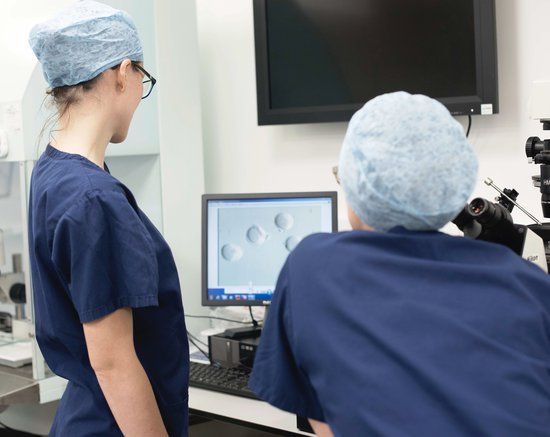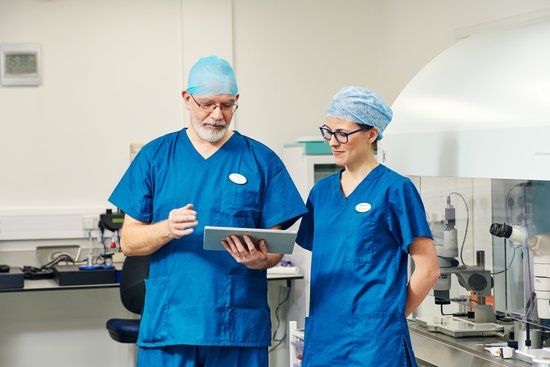

For many people starting IVF, the laboratory can feel like a mystery. While patients are closely involved in appointments, scans, and treatment decisions, much of the crucial work happens behind the scenes in the embryology laboratory. Understanding what happens from the moment eggs are collected to the development of embryos can help demystify the process and provide reassurance during treatment.
At Manchester Fertility, IVF combines advanced laboratory technology with expert embryology care to support every stage of embryo development. Here's a closer look at the journey from egg to embryo.
What Happens During IVF?
In Vitro Fertilisation (IVF) is a fertility treatment in which eggs and sperm are brought together outside the body in a specialised laboratory. If fertilisation occurs, the resulting embryos are carefully monitored as they develop before the most suitable embryo is selected for transfer into the uterus.
While every patient's treatment plan is personalised, the laboratory journey follows several key stages.
Step 1: Egg Collection
Before eggs reach the laboratory, ovarian stimulation medication is used to encourage the ovaries to produce multiple mature eggs. Once the eggs have reached the appropriate stage of development, a trigger injection helps complete their maturation.
Approximately 35-38 hours later, egg collection takes place under ultrasound guidance. The eggs are then immediately transferred to the embryology laboratory, where embryologists assess and prepare them for fertilisation.
Step 2: Sperm Preparation
On the same day as egg collection, a sperm sample is prepared in the laboratory. Embryologists carefully process the sample to identify the healthiest sperm for fertilisation.
Depending on individual circumstances, fertilisation may occur through:
Conventional IVF, where prepared sperm are added to the eggs.
ICSI (Intracytoplasmic Sperm Injection), where a single healthy sperm is injected directly into an egg. This approach may be recommended in cases involving male factor infertility or previous fertilisation challenges.
Step 3: Fertilisation
Following insemination, embryologists monitor the eggs for signs of successful fertilisation. This typically occurs around 16-18 hours after the sperm and egg are brought together.
Not every egg will fertilise successfully, which is completely normal. The embryology team carefully assesses each fertilised egg to identify those continuing to develop as expected.
Step 4: Embryo Development and Culture
Once fertilisation has taken place, the embryos enter a critical period of development known as embryo culture. The embryo culture process is the same whether fertilisation has occurred through conventional IVF or by intracytoplasmic sperm injection (ICSI).
The embryos are placed in specialised incubators designed to replicate the optimal conditions found within the body. Over the next two to five days, embryologists monitor their progress, assessing factors such as cell division and developmental milestones.
During this stage, embryos continue to grow and develop. By day five, some embryos reach the blastocyst stage, a more advanced stage of development associated with strong implantation potential. Manchester Fertility's laboratory supports embryo culture up to the blastocyst stage as part of its advanced embryology programme.
How Embryologists Monitor Embryo Development
Embryologists play a vital role throughout the IVF process. Their expertise helps determine which embryos are developing most successfully and may have the best chance of achieving a pregnancy.
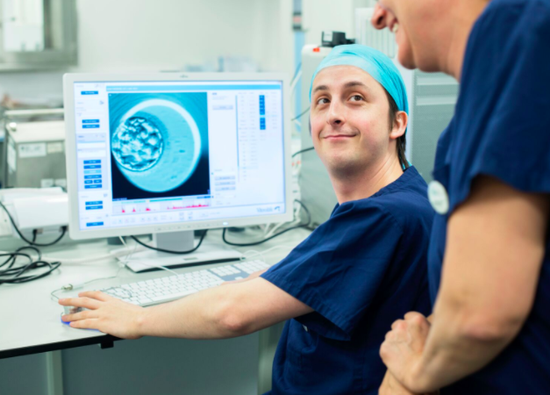
At Manchester Fertility, embryos may be cultured in standard incubators or monitored using Embryoscope technology. This time-lapse system allows embryologists to observe embryo development continuously without disturbing the embryos, providing valuable insights into key developmental stages.
This combination of expert assessment and advanced technology helps support informed embryo selection decisions
Step 5: Choosing an Embryo for Transfer
After several days of development, the embryology team evaluates the embryos and identifies the most suitable embryo for transfer.
Embryo selection is based on developmental progress and quality assessments carried out throughout the culture period. It often takes only a few days of observation for embryologists to identify embryos with the strongest pregnancy potential.
The selected embryo is then prepared for transfer.
Step 6: Embryo Transfer
Embryo transfer is a carefully planned procedure carried out under ultrasound guidance. The chosen embryo is gently placed into the uterus, where it could implant and continue developing in the same way as a naturally conceived pregnancy.
For many patients, this marks the end of the laboratory phase of IVF and the beginning of the two-week wait before taking a pregnancy test.
What Happens to Remaining Embryos?
If additional good-quality embryos remain after transfer, they may be frozen using a process called vitrification.
Frozen embryos can be stored for future use, offering the possibility of subsequent treatment cycles or sibling pregnancies without the need to repeat ovarian stimulation and egg collection.
The Importance of the IVF Laboratory
The IVF laboratory is where science and fertility care come together. From sperm preparation and fertilisation to embryo culture and selection, every stage is carefully managed by experienced embryologists using sophisticated equipment and rigorous quality standards.
While patients may only see a small part of what happens behind laboratory doors, this work is fundamental to IVF success. Understanding the journey from egg to embryo can help provide confidence and clarity throughout treatment, knowing that every embryo is being supported by a dedicated team focused on giving it the best possible environment for development.
Ready to learn more about IVF treatment? Our team can guide you through every stage of your fertility journey, from your first consultation to embryo transfer and beyond. Book a free 1-2-1 discovery appointment today.
Last updated: 17th August 2026