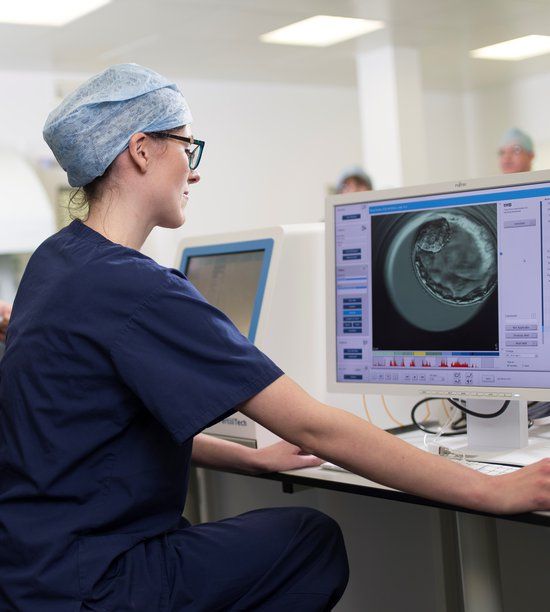

Embryology has always been at the heart of successful IVF treatment. Every fertilised egg, every developing embryo, and every transfer decision relies on the expertise of highly skilled embryologists working behind the scenes in the laboratory.
In 2026, however, embryology is undergoing one of its most significant transformations yet. Advances in artificial intelligence (AI), time-lapse imaging, data analytics, and laboratory automation are helping embryologists gain deeper insights into embryo development than ever before.
Rather than replacing human expertise, these technologies are enhancing decision-making, supporting consistency, and helping fertility specialists provide more personalised treatment for patients.
Here's a closer look at how technology is reshaping embryology and what it means for IVF patients today.
The Rise of AI-Assisted Embryo Assessment
Traditionally, embryo assessment relied on embryologists visually evaluating embryos at specific points during development. While this remains an essential part of IVF, AI-powered systems can now analyse thousands of developmental data points that would be impossible for the human eye to track alone.
Modern AI tools assess:
- Cell division timing
- Embryo growth patterns
- Morphological characteristics
- Developmental milestones
- Historical outcome data
By comparing embryo development against large datasets, AI can provide additional information that helps embryologists identify embryos with the strongest developmental potential. Importantly, these systems act as decision-support tools rather than making decisions independently. Clinical expertise remains central to every treatment plan.
At Manchester Fertility, AI-assisted embryo analysis is already used alongside embryologist expertise to support embryo selection and improve consistency within the laboratory.
Time-Lapse Imaging Continues to Evolve
One of the most impactful innovations in embryology has been the introduction of time-lapse incubation systems such as the EmbryoScope.
Unlike traditional incubators, time-lapse technology continuously photographs embryos throughout their development without disturbing their carefully controlled environment. This creates a detailed video that allows embryologists to observe every stage of development while maintaining optimal culture conditions.
The benefits include:
- Continuous 24/7 monitoring
- Reduced embryo handling
- Detailed developmental information
- Improved embryo selection insights
- Enhanced understanding of developmental patterns
By 2026, the combination of time-lapse imaging and AI analysis will have become one of the most powerful tools available in modern IVF laboratories, helping embryologists evaluate embryos with greater precision than ever before.
Data-Driven Decision Making
Fertility treatment generates vast amounts of information, from hormone levels and laboratory observations to embryo development metrics and treatment outcomes.
Today, advanced data analytics platforms allow embryology teams to identify patterns across thousands of treatment cycles. These insights can help clinics refine laboratory protocols, optimise culture conditions, and better understand factors that contribute to successful outcomes.
This data-driven approach supports:
- Greater consistency in laboratory procedures
- Continuous quality improvement
- More personalised treatment recommendations
As reproductive medicine becomes increasingly evidence-based, the ability to learn from large datasets is helping fertility clinics continually improve patient care.
New Insights Into Egg Quality
Technology is not only transforming embryo assessment, it is also providing new ways to understand egg quality.
Recent advances in AI-powered imaging can analyse egg characteristics that may not be visible under traditional microscopic examination. Sophisticated software evaluates subtle features and generates personalised reports that may provide additional insights to support a better understanding of reproductive potential.
These developments are helping fertility specialists:
- Gain earlier insights into reproductive health
- Support treatment planning
- Provide more personalised consultations
- Improve patient understanding of their fertility journey
While no single test can predict treatment success, these tools add another layer of valuable information for both clinicians and patients.
Automation Is Enhancing Laboratory Precision
Embryology laboratories have always required meticulous attention to detail. In 2026, automation will help reduce variability and improve consistency across many laboratory processes.
Examples include:
- Automated monitoring systems
- Environmental control technology
- Digital quality assurance tools
- Advanced imaging platforms
- AI-supported workflow management
These innovations help laboratories maintain highly controlled conditions while allowing embryologists to focus on the complex clinical decisions that require professional judgement and experience.
The Future of Embryology: Human Expertise Enhanced by Technology
Despite the rapid pace of innovation, one thing remains unchanged: successful IVF still depends on skilled embryologists.
Technology can analyse vast amounts of data, identify patterns, and provide additional insights, but it cannot replace the experience, judgement, and clinical understanding that embryologists bring to every treatment cycle. Researchers and clinicians increasingly emphasise that the most effective approach combines advanced technology with expert human oversight.
The future of embryology is therefore not about machines replacing people. It is about creating smarter laboratories where technology empowers embryologists to make even more informed decisions and deliver the highest standard of patient care.
As we move through 2026 and beyond, advances in AI, imaging technology, automation, and data science will continue to shape the future of fertility treatment.
For patients, these innovations offer exciting possibilities: more detailed insights, increasingly personalised care, and continued improvements in the precision of embryo assessment and selection. Combined with the expertise of experienced embryologists, technology is helping IVF laboratories achieve new levels of understanding and excellence.
At Manchester Fertility, we remain committed to embracing proven innovations that enhance patient care while maintaining the personalised, expert-led approach that sits at the heart of everything we do.
Interested in learning more about the technology behind IVF treatment or starting your journey? Book a free 1-2-1 today or call us on 0161 300 2730
Last updated: 7th September 2026