


Polyendocrine Metabolic Ovarian Syndrome (PMOS)
PMOS is one of the most common hormonal conditions affecting women of reproductive age. It can impact ovulation, hormone balance, metabolism and fertility

Last Updated: 5th August 2026
Clinically reviewed on 5th August 2026 by Dr Raj Mathur MD FRCOG
Polyendocrine Metabolic Ovarian Syndrome (PMOS) is a complex hormonal and metabolic condition that affects multiple systems throughout the body. It can influence:
- Ovulation and menstrual cycles
- Hormone production
- Insulin regulation and metabolism
- Weight management
- Skin and hair health
- Fertility
Although many people are familiar with the term PCOS, the condition was officially renamed PMOS in 2026 following an international consensus involving clinicians, researchers and patient organisations. The new name better reflects the fact that the condition is not simply about ovarian cysts, but involves hormonal (endocrine), metabolic and reproductive health.
The condition itself has not changed; only the name has been updated to better describe its underlying causes and effects.
PMOS impacts 1 in 8, or more than 3.1 million women and girls in the UK.
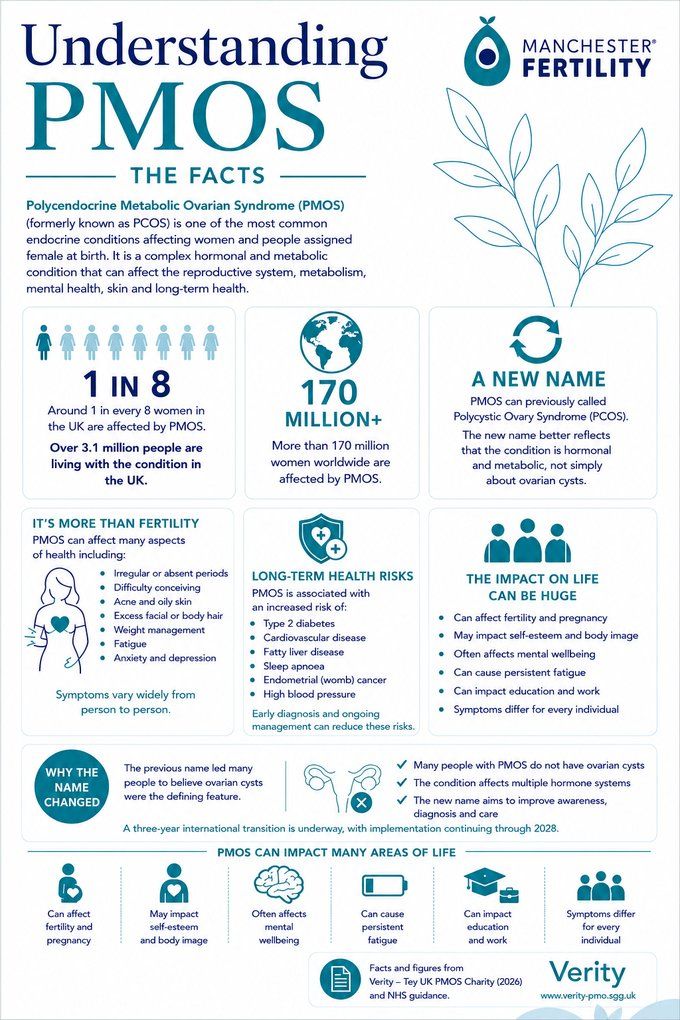
PMOS facts at a glance
PMOS affects around 1 in 8 women in the UK
PMOS is one of the most common hormonal and metabolic conditions affecting people with ovaries, particularly during the reproductive years. It develops when there are disruptions in hormone regulation, often involving higher-than-usual levels of androgens (“male” hormones such as testosterone) and changes in how the body responds to insulin
PMOS is one of the leading causes of ovulatory infertility
Ovulation is the process where an ovary releases an egg each menstrual cycle. In PMOS, hormonal imbalances can prevent regular ovulation or cause ovulation to happen less frequently. This can make conception more difficult because there may be fewer opportunities for an egg and sperm to meet
Not everyone with PMOS has ovarian cysts
Despite the name, ovarian cysts are not required for a diagnosis. The “polycystic” appearance refers to the presence of many small follicles (developing egg sacs) seen on an ultrasound, rather than typical large ovarian cysts.
A person may have PMOS with:
- Irregular or absent periods
- Signs of higher androgen levels (such as acne, excess facial/body hair, or scalp hair thinning), or metabolic changes, without having polycystic-looking ovaries on a scan.
Diagnosis usually considers a combination of symptoms, hormone tests, and ultrasound findings rather than relying on a single feature.
Symptoms and severity vary significantly from person to person
PMOS does not look the same for everyone. Some people may experience several symptoms, while others may have only one or two. Common symptoms can include:
- irregular, infrequent, or absent periods
- difficulty becoming pregnant due to irregular ovulation
- acne or oily skin
- increased facial or body hair growth
- thinning hair or hair loss from the scalp
- weight gain or difficulty managing weight
- darkened patches of skin (often linked with insulin resistance)
- tiredness, anxiety, or low mood in some individuals
The severity of symptoms can also change over time, meaning someone’s experience in their teens may differ from their experience as they get older.
Early diagnosis and management can improve fertility and long-term health
Recognising PMOS early allows healthcare professionals to help manage symptoms and reduce potential health risks. Treatment is personalised and may include lifestyle approaches, medication to regulate periods or hormones, support for fertility, and monitoring of metabolic health.
Long-term follow-up is important because PMOS is associated with a higher risk of conditions such as:
- Insulin resistance and type 2 diabetes
- High blood pressure
- Abnormal cholesterol levels
- Cardiovascular disease
- Difficulties related to the womb lining if periods are very infrequent for long periods
Early support can help people make informed choices about fertility, manage symptoms effectively, and protect their overall health.
Symptoms of PMOS
PMOS can present in many different ways. Common symptoms can include:
- Irregular or absent periods
- Difficulty becoming pregnant
- Infrequent or absent ovulation
- Acne or oily skin
- Excess facial or body hair (hirsutism)
- Thinning hair or hair loss
- Weight gain or difficulty losing weight
- Insulin resistance
- Skin tags or darkened patches of skin
- Fatigue
- Mood changes
Some women experience only a few symptoms, while others are affected by several.
How does PMOS affect fertility?
For many women, PMOS makes it more difficult to conceive because ovulation does not occur regularly or may stop altogether.
Without regular ovulation, there are fewer opportunities for an egg to be released and fertilised.
However, PMOS does not mean pregnancy is impossible. Many women conceive naturally after lifestyle changes or ovulation induction treatment, while others benefit from fertility treatments such as IVF.
Our fertility specialists will recommend treatment based on your age, medical history, ovarian reserve and any other fertility factors affecting you or your partner.

Diagnosing PMOS
Diagnosis is typically based on the Rotterdam Criteria, the internationally recognised benchmark. A diagnosis of PMOS is made when at least two of the following three features are present, after other conditions with similar symptoms have been ruled out:
- Irregular or absent ovulation (often causing irregular or absent periods)
- Clinical or biochemical signs of elevated androgens (such as acne, excess hair growth, or raised testosterone levels)
- Polycystic ovarian morphology seen on ultrasound
We offer fertility assessments to single patients and heterosexual couples without a GP referral. Earlier fertility assessments can often provide greater clarity and reassurance for your next steps.
Our assessments are £465 for heterosexual couples and £365 for single females.
PMOS treatment options



PMOS and IVF
Women with PMOS often respond very well to IVF treatment because they usually have a higher ovarian reserve, meaning there are more eggs available to stimulate during treatment. This can result in a good number of mature eggs being collected, increasing the opportunities to create healthy embryos.
However, women with PMOS are also more likely to respond strongly to fertility medication, which can increase the risk of Ovarian Hyperstimulation Syndrome (OHSS). Our experienced fertility specialists use personalised stimulation protocols, carefully selected medication doses, and close monitoring with ultrasound scans and hormone tests throughout your treatment. This allows us to maximise the number of healthy eggs retrieved while significantly reducing the risk of complications.
Our embryology laboratory uses advanced techniques to optimise fertilisation and embryo development, and where appropriate, we may recommend strategies such as freezing all embryos for transfer in a later cycle if this is the safest approach.
While IVF cannot treat the underlying hormonal imbalance of PMOS, it can help overcome many of the fertility challenges associated with the condition, particularly when ovulation is irregular or other treatments have not been successful. With expert care, personalised treatment, and advanced laboratory technology, we aim to give you the best possible chance of achieving a healthy pregnancy while prioritising your safety at every stage.
Why choose Manchester Fertility?
Our experienced fertility specialists understand the complex relationship between PMOS and fertility.
When you choose us, you'll benefit from:
- Consultant-led fertility care
- Personalised treatment plans
- Advanced IVF technology
- Dedicated nursing support
- Transparent pricing
- High success rates
A compassionate, experienced multidisciplinary team

Dr Anamika Rao
Senior Fertility Consultant
Dr Anamika Rao is our Fertility Consultant with 20 years of experience in Obstetrics, Gynaecology, Infertility and Early pregnancy. She has completed her postgraduate training both from India and the UK and is a Fellow of Royal College of Obstetricians and Gynaecologists.

Dr Raj Mathur
Medical Director
Dr Raj Mathur is our Medical Director. A Consultant Gynaecologist with a long and established career in Reproductive Medicine. He is also the chair of the British Fertility Society (BFS).

Dr Sharon Tay
Fertility Specialist
Dr Sharon Tay is one of our resident fertility doctors here at Manchester Fertility. With a passion for healthcare, she began her career in reproductive medicine by earning her primary medical degree, MB BCh BAO, from the prestigious National University of Ireland (RCSI/RUMC).

FAQs
Yes. PMOS is the new international name for the condition previously known as PCOS. The diagnosis and treatments remain the same the updated name simply better reflects the condition's hormonal and metabolic nature.
Yes. Many women with PMOS conceive naturally, although it may take longer because ovulation can be irregular. Others may benefit from fertility treatment.
No. Despite the previous name, many women diagnosed with PCOS (now PMOS) never had ovarian cysts. This was one of the reasons behind the international name change.
PMOS can be associated with an increased risk of pregnancy complications in some women. Your fertility specialist will discuss any individual risks and how these can be managed.
The exact cause of PMOS is still unknown. Research suggests it develops through a combination of genetic, hormonal and environmental factors. Insulin resistance and higher levels of androgens (male hormones) are common features of the condition.
PMOS is diagnosed using a combination of symptoms, hormone blood tests and ultrasound findings. Your doctor will also rule out other conditions that can cause similar symptoms. Not everyone with PMOS has cysts visible on an ultrasound scan.
The earliest symptoms often include irregular periods, acne, increased facial or body hair, unexplained weight gain or difficulty becoming pregnant. Some women notice symptoms during their teenage years, while others are diagnosed later when trying to conceive.
PMOS is a lifelong condition, but its symptoms can change throughout life and can often be managed effectively with lifestyle changes, medication and appropriate medical care. Many women experience significant improvements in their symptoms with treatment.
Symptoms can change over time. While some women find menstrual cycles become more regular as they get older, the metabolic effects of PMOS, such as insulin resistance, high cholesterol and an increased risk of type 2 diabetes, may become more significant if not managed.
PMOS primarily affects ovulation rather than egg quality. Many women with PMOS have a good ovarian reserve and produce healthy eggs. However, age remains the most important factor affecting egg quality.
Ready To Take The Next Step?
Whether you've recently been diagnosed with endometriosis or have been trying to conceive for some time, our experienced fertility team is here to help you understand your options.

Book Your Fertility Assessment Today
A fertility assessment involves a series of simple tests and a consultation with a doctor.
We will assess your current fertility status, identifying any factors affecting your ability to conceive and providing insight into potential treatment options.
Our Fertility assessments are£465 for heterosexual couples and £365 for single females.
Want to know more about PMOS?

Book a free 1-2-1 call
Speak to one of our friendly co-ordinators to find out exactly which type of fertility testing option suits you.

Request a callback
Fill in your details here and we'll call you back to discuss our fertility testing options

View our fertility treatments
Find out more about our fertility treatments.