






Did we answer all your fertility questions today?
If you still feel you need more guidance and support, you can book a FREE 1-2-1 discovery meeting to talk through the options available to you.

If you are in a same-sex male relationship, you may be considering starting your family via surrogacy treatment. Advancements in reproductive medicine mean surrogacy is becoming an increasingly accessible fertility treatment for those who otherwise could not carry a pregnancy and same-sex male couples. This guide explores the different pathways to starting your family, the process and details of our surrogacy treatment plan and other helpful information you may want to consider.
A Male Fertility test or assessment is exactly as it sounds ‒ an assessment of your sperm health and your general fertility. Available to both single men, and to those who would like to be tested alongside a partner, a Male Fertility Assessment will provide insight into your sperm health.
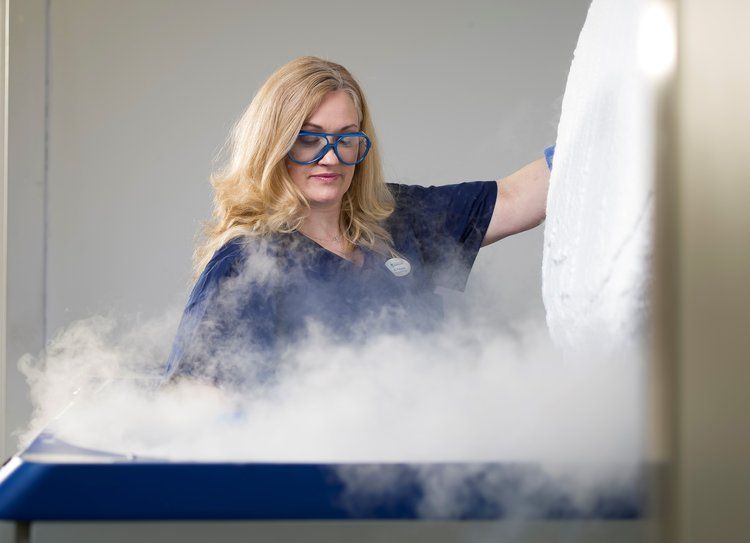
Sperm Freezing is the process of cryogencially storing a sample of semen. Men are able to freeze their sperm for use in their own future treatment, such as the creation of embryos for surrogacy. If you and your partner are not yet ready to create embryos but are worried about your sperm quality decreasing over time, choosing to store your sperm now may address that concern.
Manchester Fertility also offers same-sex male couples the opportunity to create embryos for storage, this way they can be used in future treatment. This usually occurs as part of the surrogacy process, but can be offered as an individual treatment if you want to store your embryos for future use.
HFEA, the Human Fertilisation & Embryology Authority, define surrogacy as either Full Surrogacy or Partial Surrogacy. We offer both Full Surrogacy and Partial Surrogacy at Manchester Fertility, depending on your circumstance, you may choose either for your treatment plan.
Full Surrogacy, also known as Gestational Surrogacy, is when the eggs from an intended parent or a donor are used to make embryos for the surrogacy treatment. There is therefore no genetic connection between the baby and the surrogate.
Partial Surrogacy, or Traditional Surrogacy, involves an egg from the chosen surrogate being fertilised using sperm from an intended parent of the baby. In this case, there would be a genetic connection between the surrogate and your baby.
At Manchester Fertility, we aim to ensure the surrogacy process is as straightforward as possible for our patients. Although some couples join us after having previous treatment, we are their first choice for the vast majority of our patients. We have outlined the surrogacy treatment process below for those who have not undergone treatment or had embryos created at another clinic.
We want you to feel supported throughout every step of your journey with us. If you have decided surrogacy is the right path for you, we'll ask that you attend a consultation at our state-or-the-art clinic so we can discuss the medical, legal and emotional implications of your choice - and offer any advice we can to help you begin your journey.
Our patients are in a fortunate position at Manchester Fertility, as we offer access to donor eggs through our partner clinic Manchester Donors. If you donor eggs her for your surrogacy treatment we will be able to help you arrange this. In the case of Partial Surrogacy, the egg used for treatment will be given by your surrogate.
Choosing a surrogate is a deeply personal and important part of your journey to starting a family. You may have a personal connection to your surrogate, or instead source yours through a reputable network. No matter your choice, we'll support you with advice and expert knowledge so you can make the best choice for your future family.
At this stage we'll also recommend you take the time getting to know your surrogate, seeing if they're the right fit for you and ironing out any of the legal details.
If you, or your partner, would like to create embryos for your surrogacy treatment we will ask that you undergo a series of intitial tests and screenings. This is to ensure we adapt your treatment plan to your individual needs. This will include a semen analysis, hormone blood test and viral screening, among other processes, to ensure your sperm, or your partners sperm, are in a reasonable condition for treatment.
If a patient would potentially require both donor sperm and donor eggs for treatment, referred to as 'double donation', we would unfortuantely be unable to offer them surrogacy treatment at Manchester Fertility.
Your surrogate, an intended parent or an egg donor will be given medication to help develop their eggs and will undergo an egg retrieval procedure. Frozen eggs from a donor can also be used.
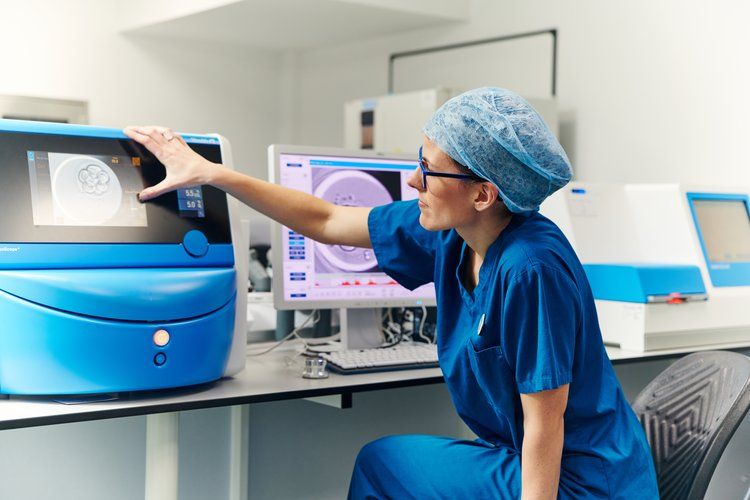
The eggs are then fertilised in the laboratory to create an embryo, which will be transferred to the surrogate.
After approximately nine months your surrogate will help you welcome your child into the world. Most intended parents join the surrogate at the hospital for the birth.
After the baby is born and the surrogate is discharged from the hospital, you and your surrogate can all return home, you with your new baby and the surrogate with the satisfaction of giving the selfless gift of parenthood to someone else.
When your baby is born you will need to apply for a parental order to transfer legal parenthood from the surrogate to the intended parents or IP(s). This can only be done with the surrogate's consent. However with the right legal advice and preperation this can be a very straight forward process. The parental order process takes place after birth and involves the family court, and a court-appointed social worker.
Some patients join us from a place of great excitement, with this being their first attempt at conception. Others may have had a difficult journey on their journey to surrogacy.
To ensure we’re giving every patient, regardless of their experiences, the best quality of care we can provide we established our specialist surrogacy team. The team is made up of staff members who have in the past not only gone above and beyond for patients, but also have the expert knowledge and experience needed to guide patients through the surrogacy process.
Peter is a consultant gynaecologist, he qualified from Hungary in 2000 and gained his EBCOG recognized specialisation in Obstetrics and Gynaecology in 2005. With over 13 years of experience as a specialist and a member and recognised trainer of the British Fertility Society, Peter is well-versed in all aspects of the surrogacy process and enjoys finding new ways to improve the quality of care his patients receive.
Anamika completed her Obstetrics and Gynaecology training both in India and the UK, and has been a member of the Royal College of Obstetricians and Gynaecologists since 2005. She is an expert in not only in Obstetrics, Gynaecology, assisted conception, fertility preservation and treatment with donor gametes – but has a long history working to support intended parents and surrogates through the surrogacy process.
It is not unusual for a family member or close friend to act as a surrogate. However, some patients prefer to choose their surrogate from a recognised surrogacy partner for their treatment.
We understand that finding a surrogate is a deeply personal choice and although we can't make the decision for you, as a specialist fertility clinic, we have compiled all the resources you will need to help you in your search.
There are a number of UK based organisations that can provide support to those on their journey through surrogacy and help you source the right surrogate for your treatment, we would recommend:
Throughout the surrogacy process there are a few processess that you will need legal advice and guidance for, such as when you're creating a legal surrogacy document and when you're putting into place appropriate levels of insurance.
When looking for a surrogate, you’ll want to make sure they are able to have a safe, healthy pregnancy and birth. You’ll also want someone you can build a close, trusting relationship with. It’s really important that you’re clear about how things will work in the future.
This is where legal advice and guidance can really help. Legal advice can be invaluable when reaching an agreement with your surrogate and when obtaining your parental order after your baby is born.
Useful Resources for Intended Parents:
There is no waiting list for those seeking surrogacy at Manchester Fertility. However, it may take some time for the final stages of your treatment to commence. We perform several tests and screenings to ensure your or your partner's sperm is suitable for treatment before the process can begin. We also screen your surrogate to ensure that their health won't be impacted throughout treatment and, if their eggs are being used to create embryos, to ensure they're not a carrier for any potentially harmful hereditary conditions.
Going through fertility treatment can take an emotional toll, it can be time-consuming process and requires a lot of investment for you and your partner. We understand that it can be hard to talk to your partner about how you are feeling, or to confide in family or friends.
Counselling for those who intend to start their families through surrogacy is a legal requirement. Here at Manchester Fertility, we offer sessions with a specialist fertility counsellor as part of your tailored treatment plan. Intended Parents may feel some anticipatory nerves ahead of their counselling sessions, rest-assured that you're in safe hands and that your counselling sessions will act as an additional method of support to ensure you feel secure throughout the whole process.
A person must meet a few requirements before they can become a surrogate. This is to ensure that your child, and the surrogate, are at no risk during the pregnancy. These criteria are:
The surrogacy networks we work with, and recommend, ensure the surrogates they work with meet all of these criteria in advance.
There are many simple lifestyle considerations you can make to ensure the best sperm quality possible.
Maintain a healthy weight: Having a healthy BMI is a big factor in your fertility. If you are overweight or underweight you are more likely to have poorer quality and a reduced number of sperm.
A healthy diet: Pack plenty of omega-3, antioxidants, vitamins and minerals into your diet and avoid a high intake of red meat, processed meat and caffeine. These have been found to negatively affect sperm in some studies.
Keep fit and active: Moving more will help to maintain a healthy BMI and goes hand in hand with a healthy diet. Men who exercise at a moderate to vigorous rate have a higher sperm count than those who don’t.
Reduce alcohol: Alcohol affects sperm too, so don’t excessively drink.
Quit smoking: Smoking can increase DNA damage in sperm and lower sperm concentration and mobility.
Quit drugs: Recreational and performance-enhancing drugs will affect your sperm. In particular performance-enhancing drugs, because of how the drugs may affect the hormones that control sperm production.
Keep cool: Sperm doesn’t like heat, so keep cool where it counts. Avoid hot saunas, hot baths, tight underwear, and continuous use of your laptop on your lap.
Reduce stress and sleep more: Severe stress may affect sperm production, so find ways to reduce your stress levels and switch off. Get plenty of sleep too, as sleep helps to moderate hormone levels.

Speak to one of our friendly co-ordinators to find out exactly which type of fertility testing option suits you.

Fill in your details here and we'll call you back to discuss our fertility testing options

Find out more about our fertility treatment for male-factor infertility.
If you still feel you need more guidance and support, you can book a FREE 1-2-1 discovery meeting to talk through the options available to you.